

You saw “YWA” in a text, paused for a second, and probably thought: Was that friendly… or a little rude? That reaction is normal. A lot of texting slang looks harmless until tone enters the chat.
And that’s exactly why people search for the YWA meaning in text conversations. The acronym itself is short. The interpretation? Not always.
Depending on who sent it, where it appeared, and whether it came with an emoji or a period, “YWA” can sound polite, playful, dismissive, sarcastic, or mildly passive-aggressive. Tiny letters. Big difference.
Let’s decode it properly.
What Does YWA Mean in Text?
In most online chats and messaging apps, YWA stands for “You’re Welcome Anyway.”
It’s a variation of the more common abbreviation “YW,” which simply means “You’re welcome.”
The extra “A” changes the vibe.
Sometimes only slightly. Sometimes dramatically.
Full Form of YWA
The most accepted YWA acronym meaning is:
YWA = You’re Welcome Anyway
People use it after:
- saying thanks goes unnoticed
- someone responds late
- a message feels ignored
- helping someone without receiving acknowledgment
You’ll commonly spot it in:
- Snapchat chats
- TikTok comments
- Instagram DMs
- WhatsApp messages
- Discord chats
- SMS texting
It belongs to the larger category of internet slang and texting abbreviations that evolved from fast digital communication.
The Most Common Meaning
Most of the time, YWA means:
“I helped you, even if you didn’t acknowledge it.”
That can sound:
- friendly
- teasing
- sarcastic
- passive-aggressive
Context decides everything.
Here’s a neutral example:
Person 1: “Ohhh I just saw your message.”
Person 2: “YWA lol”
In that case, it feels playful. Not hostile.
Now compare it to this:
Person 1: “I fixed the issue already.”
Person 2: “YWA.”
That period changes the tone. Suddenly it feels colder and sharper.
Welcome to modern texting culture.
Why People Use YWA in Chats
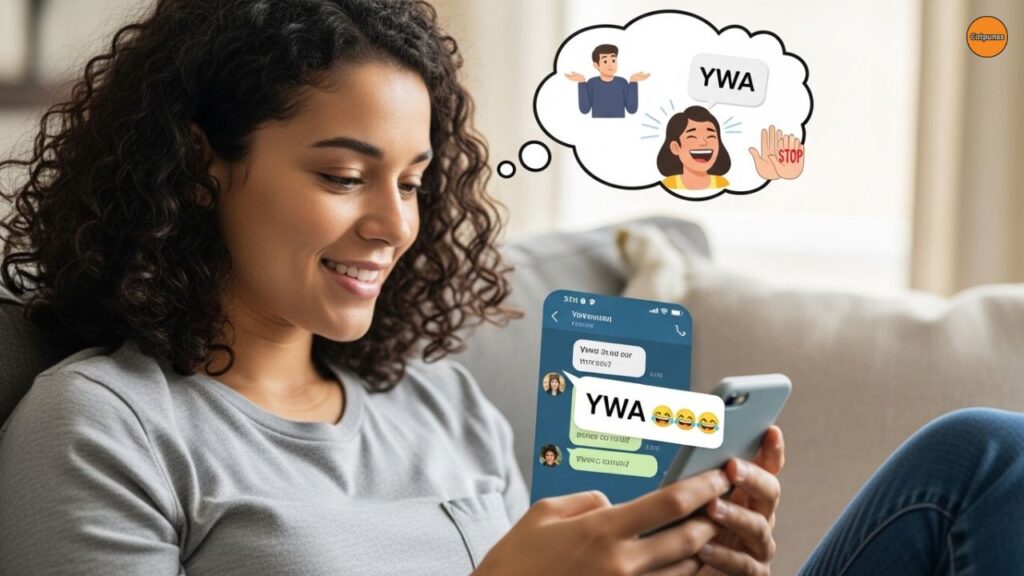
People rarely type full emotional explanations anymore. Texting shorthand compresses emotion into tiny signals.
YWA works because it can communicate:
- acknowledgment
- annoyance
- humor
- emotional subtext
- sarcasm
Fast.
That’s why social media slang keeps evolving. Short acronyms save time while still carrying personality.
Is YWA Friendly, Sarcastic, or Rude?
This is the real question people want answered.
Not the dictionary meaning.
The emotional meaning.
When YWA Sounds Friendly
Used casually between friends, YWA often feels harmless.
Example:
Friend 1: “Thanks for sending the notes!”
Friend 2: “YWA :)”
That reads as:
- relaxed
- informal
- warm
Emoji usage softens the phrase significantly.
Friendly indicators include:
- laughing emojis
- lowercase typing
- exclamation marks
- existing close relationship
A “ywa haha” feels very different from a plain “YWA.”
When YWA Feels Passive-Aggressive
Here’s where tone interpretation matters.
YWA can sound passive-aggressive when:
- someone expected a thank you
- messages were ignored
- there’s visible frustration
- punctuation becomes abrupt
Example:
Person 1: “Did you finish it?”
Person 2: “Yeah. Sent it hours ago. YWA.”
That doesn’t feel cheerful.
It implies:
“You should’ve acknowledged my effort already.”
Many internet acronyms rely heavily on implied tone. YWA is one of them.
How Emojis Change the Meaning
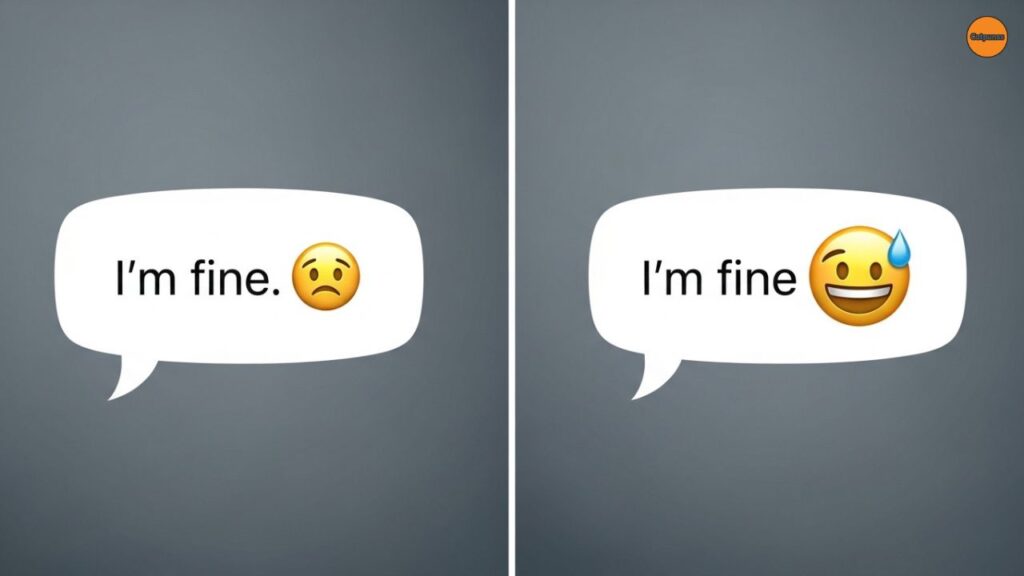
Emojis completely reshape digital communication.
Compare these:
- “YWA”
- “YWA 😂”
- “YWA ❤️”
- “YWA 🙄”
Same acronym. Different emotional outcomes.
Quick breakdown:
| Version | Likely Tone |
|---|---|
| YWA | Neutral or unclear |
| YWA 🙂 | Friendly |
| YWA lol | Playful |
| YWA 🙄 | Annoyed |
| YWA. | Cold or irritated |
That’s why conversation context matters more than the acronym itself.
Examples of YWA in Real Conversations
Seeing actual examples makes internet slang easier to understand.
Friendly Example
Alex: “Thanks for helping me study.”
Jordan: “YWA!”
Simple. Warm. Casual.
Playful Example
Mia: “Oops I forgot to reply.”
Noah: “YWA haha”
That feels teasing, not angry.
Sarcastic Example
Chris: “I already solved the problem.”
Taylor: “YWA.”
Short sentence. Hard stop. Slight tension.
Professional Example
Honestly? YWA rarely belongs in professional communication.
But younger coworkers sometimes use it informally in internal chats.
Example:
Coworker: “Appreciate the quick fix.”
You: “YWA!”
Even there, “You’re welcome” is usually safer.
YWA vs Other Texting Acronyms
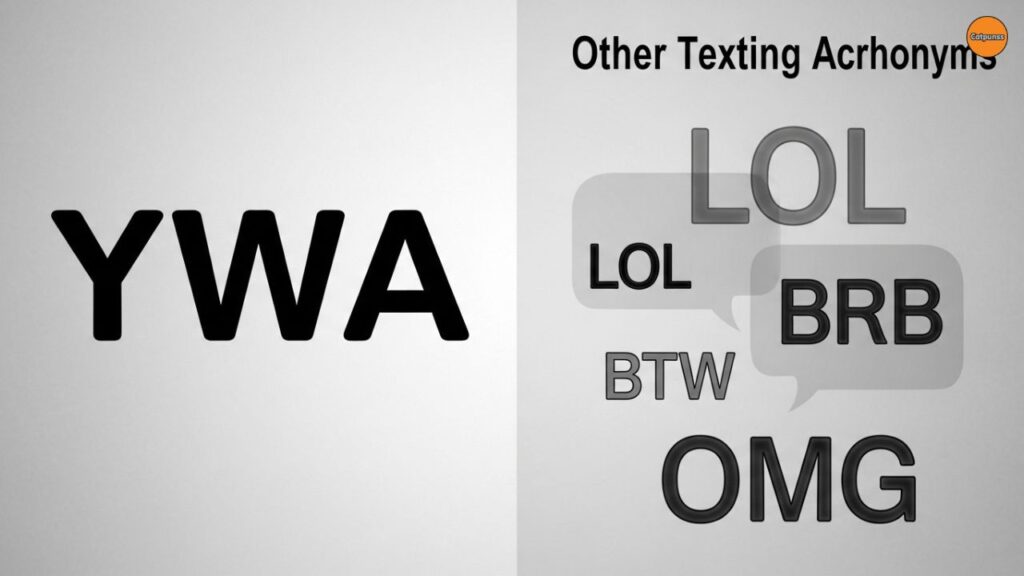
Internet slang evolves in clusters. People who use YWA often use dozens of other chat shorthand terms too.
YWA vs YW
This distinction matters.
YW
- neutral
- polite
- standard acknowledgment
YWA
- emotionally loaded
- more conversational
- can imply sarcasm or playful frustration
Think of YW as plain coffee.
YWA adds spice.
YWA vs NP (“No Problem”)
“NP” means “No Problem.”
The tone feels softer and more service-oriented.
Example:
- “NP” = easygoing
- “YWA” = emotionally expressive
People often choose NP in professional messaging because it sounds calmer.
Similar Internet Slang Terms
You’ll often see YWA used alongside other texting abbreviations like:
- LOL — Laugh Out Loud
- BRB — Be Right Back
- IMO — In My Opinion
- TBH — To Be Honest
These acronyms belong to the same informal messaging ecosystem where speed and tone matter equally.
Where Is YWA Commonly Used?
Different platforms create different slang habits.
YWA appears most often in fast, casual conversation spaces.
Snapchat
Snapchat encourages short, rapid-fire responses.
That environment naturally produces chat shorthand like:
- YW
- YWA
- LOL
- TBH
Messages disappear quickly, so users favor brevity.
TikTok
TikTok comment sections are full of abbreviations and social media slang.
People use YWA there:
- jokingly
- sarcastically
- during creator interactions
- in reply chains
Tone gets exaggerated online, which makes acronyms more emotionally loaded.
Instagram DMs
Instagram messaging culture blends memes, humor, and casual conversation.
YWA often appears after:
- sharing links
- sending reels
- giving advice
- helping with edits or captions
WhatsApp and SMS
WhatsApp users frequently rely on texting abbreviations because conversations move quickly.
In SMS messaging, YWA works as a compact gratitude response when someone forgets basic acknowledgment.
How to Reply to YWA Naturally

Sometimes the hardest part isn’t decoding slang.
It’s figuring out how to respond without sounding awkward.
Casual Replies
Easy options include:
- “Haha thank you”
- “Appreciate it”
- “My bad”
- “You’re the best”
These responses keep the conversation relaxed.
Friendly Replies
If the tone feels playful:
- “LOL thanks again”
- “I owe you one”
- “You saved me honestly”
Acknowledgment matters here.
A good reply smooths out any possible tension.
Professional Alternatives
If you’re in workplace communication, avoid mirroring YWA unless the culture is extremely casual.
Safer responses:
- “Thanks again”
- “Much appreciated”
- “I appreciate your help”
Professional online etiquette usually favors clarity over slang.
Other Possible Meanings of YWA
While “You’re Welcome Anyway” dominates texting culture, YWA can occasionally mean other things.
You’re Welcome Always
Some users interpret YWA as:
“You’re Welcome Always”
That version sounds warmer and less sarcastic.
Still, it’s less common.
Young Writers Association
Outside texting slang, YWA may refer to organizations or community groups like:
- Young Writers Association
- regional clubs
- educational programs
This meaning appears mostly outside casual conversation.
Other Rare Uses
Acronyms often overlap across industries, gaming, and organizations.
That’s why context matters.
If YWA appears in:
- corporate emails
- technical forums
- academic discussions
…it may mean something entirely different.
Should You Use YWA in Professional Communication?
Usually? No.
At least not unless you know your audience well.
When It’s Appropriate
YWA can work in:
- friendly team chats
- informal coworker conversations
- startup environments
- gaming communities
- social messaging
Especially if your communication style already includes casual internet slang.
When to Avoid It
Avoid YWA in:
- client emails
- customer service
- academic communication
- job applications
- formal workplace messaging
Why?
Because tone interpretation becomes risky.
A client reading “YWA” might hear sarcasm where none was intended.
That’s a communication problem you don’t need.
Read next ARticuL: https://catpunss.com/su-meaning/
Frequently Asked Questions
What does YWA mean in texting?
YWA usually means “You’re Welcome Anyway” in text conversations and online chats.
Is YWA rude or sarcastic?
Sometimes. Tone depends heavily on punctuation, emojis, and conversation context.
How do you respond to YWA?
You can reply casually with:
- “Thanks!”
- “Appreciate it”
- “Haha my bad”
- “You’re awesome”
What is the difference between YW and YWA?
YW is neutral and polite. YWA often carries extra emotional tone, humor, or sarcasm.
Is YWA used on Snapchat or TikTok?
Yes. YWA appears frequently across Snapchat, TikTok, Instagram DMs, Discord, WhatsApp, and SMS messaging.
Can YWA mean something else?
Occasionally. Some people use it for “You’re Welcome Always” or organization names like “Young Writers Association,” but the texting meaning is far more common.
what does ywa mean in text
“YWA” is a texting abbreviation that usually means “You’re Welcome Anyway.” It’s often used when someone replies politely even if the thank-you wasn’t necessary or expected.
ywa meaning in text
In chat or messaging, “YWA” is shorthand for a casual or slightly playful “you’re welcome anyway.” It can sound friendly or lightly sarcastic depending on context.
ywa meaning
“YWA” doesn’t have one fixed meaning, but the most common interpretation is “You’re Welcome Anyway.” Less commonly, it can vary by group or personal slang.
what does ywa mean
Most of the time, “YWA” is used to shorten “You’re Welcome Anyway” in informal texting. It’s not a formal acronym and is mainly used in casual conversations.
what does ywa mean in texting
In texting, “YWA” generally stands for “You’re Welcome Anyway,” used when replying to thanks in a relaxed or slightly humorous way.
Final Thoughts on the YWA Meaning in Text
The interesting thing about internet slang isn’t the letters themselves. It’s the emotional shortcuts hiding inside them.
YWA is a perfect example.
On paper, it simply means “You’re Welcome Anyway.” In real conversations, though, it can signal:
- humor
- annoyance
- friendliness
- sarcasm
- playful frustration
That’s why understanding tone matters just as much as understanding the acronym.
So next time you see “YWA” pop up in a text, don’t just decode the words.
Read the mood.